


MarTech Outlook: Specials Magazine
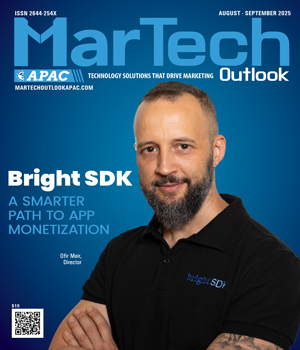
Developers no longer have to choose between revenue and user experience. Today, they can achieve both, unlocking exponential gains in retention and lifetime value (LTV). Historically, app monetization required compromise: banner ads that slowed down interfaces, interstitials that broke immersion, and paywalls that frustrated users. These trade-offs became standard practice, but they also limited sustainable growth. Bright SDK introduces a new way to monetize apps without degrading the user experience. By giving users the option to share a small portion of their idle device bandwidth in exchange for in-app rewards, the company enables developers to generate consistent, passive income. There are no ads, no tracking, and no invasive data collection. The SDK operates quietly in the background and integrates across mobile, desktop, browser, and smart TV environments. This is not a vision of the future. It is already happening, and Bright SDK is leading the shift. “Our goal is to prove that ethical monetization can outperform traditional models. Developers shouldn’t have to choose between revenue and user experience,” says Ofir Meir, Director of Bright SDK group. From Devices to Public Data Bright SDK is built on a clear principle: user experience should not be sacrificed for monetization. Once a user opts in, the SDK leverages unused device resources to route requests for publicly available web data, such as product listings, hotel prices, search engine results, and other non-personal online information. This data is gathered on behalf of enterprise clients conducting competitive research and digital analysis. Developers receive fixed daily revenue in return. There is no dependency on ad impressions or user purchases. The result is a predictable, stable income stream that is not affected by ad-fill rates, CPM volatility, or regional demand. Developers can finally scale with confidence. The SDK is built on a privacy-first architecture. Nothing activates without explicit user consent. Bright SDK does not collect personal data, use cookies, or deploy device trackers. It accesses only the user’s IP address, and only for regulatory consent tracking. All processing takes place on Bright SDK’s secure servers rather than on the user’s device, ensuring both data security and a seamless user experience. Built for Integration, Performance, and Control Technically, the SDK is designed for flexibility and ease of integration. It supports iOS, Android, Windows, Huawei, Amazon Fire, LG and Samsung TVs, and more. It is a Unity Verified Solution, and most integrations can be completed within a few days. Developers also control how and when the opt-in prompt appears, and what kind of reward is offered in return, whether it is premium access, in-game currency, or fewer ads.
Ad Management
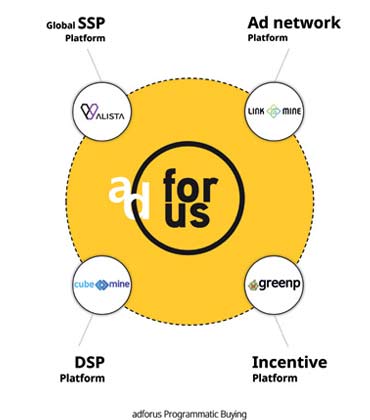
With the App Tracking Transparency (ATT) policy ending third-party cookie support, digital marketing is heading toward a ‘cookieless’ future. This shift is causing substantial disruptions for digital marketers and advertising agencies that have long relied on cookies for creating personalized content. adforus helps digital marketers cope with this transition through its mobile performance marketing solutions. Unlike marketers that create content based on first-, second-, or third-party data, adforus adapts to the evolving advertising arena by emphasizing the collection of zero-party data that consumers proactively share on its B2C platform. The platform, built on the company’s vast advertising campaign, is enriched with e-commerce industry data. adforus assists numerous ad networks, supply-side platforms, and ad exchanges through consistent creation of impactful advertisements that highlight their KPIs and deliver desired outcomes. It continually emphasizes operations management to ensure the generation of efficient and cost-effective advertising campaign results. It collaborates with clients to create campaigns that showcase maximum performance and manage related operations, including traffic verification, fraud detection, and quality assurance of the acquired database. “We have developed an advertising platform with our proprietary technology, which expands and organically connects disparate solutions to maximize a client’s campaign creation efficiencies and deliver positive advertising effects,” says Eunhyun Lee, CEO of adforus. The Korean internet-based IT infrastructure and mobile e-commerce market witnessed explosive growth since the pandemic.
Personalization

Despite the increasing popularity of IP-based messaging applications like WhatsApp, Facebook Messenger, and Viber, traditional SMS remains an important and valuable channel for businesses to engage with customers. Its continued growth and relevance in application-to-person (A2P) communications reflect its enduring effectiveness as a messaging channel. m360, a leading cloud-based messaging communications provider in the Philippines, leverages the strengths of both ubiquitous SMS and over-the-top (OTT) messaging channels to provide businesses with a valuable multi-channel messaging solution that engages with the customers of the digital age. m360’s platform stands out because of its all-purpose solution with builtin applications, making it easy for businesses of all sizes to utilize its messaging capabilities. This includes features like generator for one-time pin (OTP) requirements for online banking and financial transactions and queueing management systems for healthcare and government sectors. It also provides businesses with access to data and analytics, enabling them to monitor the performance and effectiveness of their messaging campaigns and gain insights into their customer base. “We are continually adding new channels, like email, voice, and video, to provide an omnichannel experience to businesses and allow them to communicate with their customers through a single dashboard—making it easier for them to follow their customers and engage with them on any channel they prefer,” Ramon Hirang, Chief Executive Officer of m360. Along with this user-friendly interface, m360 places a high priority on network security. Its secure, transparent, and user-friendly platform engages effectively with customers while ensuring data security. m360 also fully complies with all government and regulatory body requirements regarding security standards and contact policies.
App Monetization

The Ever-Evolving CRM Landscape
Daniel Smith, Head of Online Trade, Kmart Australia Limited
Social Media Management

People Ignore Your Ads? These 5 Tips Will Help You Win Their Attention
Taufiqi Andreawan, Head of Digital Marketing, PT. Suzuki Indomobil Motor (7269: TYO)
App Monetization

Unravelling the Challenges and Trends in the Fashion Marketing
Kathryn Coleman, Head of Customer Marketing, Pattern
App Monetization

Navigating the Future of Digital Banking
Kelferd Hor, VP, Investors Digital Experience (Digital Business), RHB Banking Group
Ad Management

Reimagining Marketing by Bridging Industries and Insights
Annie Yau, Senior Brand Marketing Manager, APAC, Shake Shack

IN MY OPINION
Digital Marketing
Listening First: How Digital Marketing Evolved Me as a Market Strategist
Alan Ray Alavarta, Assistant Digital and E-commerce Manager, Gardenia Bakeries (Philippines), Inc

LAST WORD
App Monetization
Strategies to Stay Ahead in Marketing and Investments
Jave Lin, Senior Digital Performance Manager (APAC), Aberdeen Investments
IN FOCUS
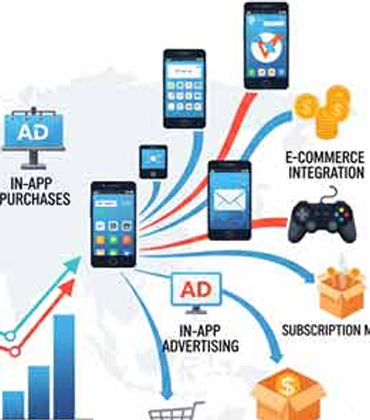
Strategic App Monetization in APAC's Growth Markets
The digital economy in APAC flourishes through mobile applications, with prevailing trends serving as key drivers for monetization strategies employed by developers and businesses.
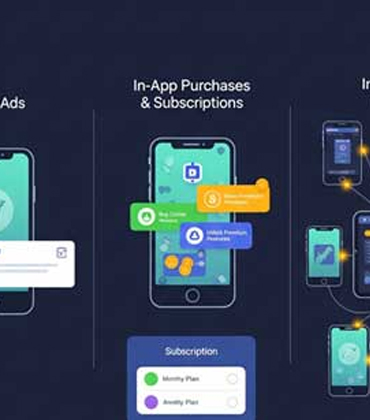
The Strategic Evolution of App Monetization in APAC
The app monetization landscape in APAC has evolved from basic ads to integrated strategies, emphasizing user engagement, data-driven advertising, and interconnected services within a comprehensive ecosystem.
EDITORIAL
Unlocking Success in the Digital Age
App Monetization Platforms enable developers to turn their applications into profit-generating assets. These platforms typically offer a variety of monetization models, from in-app purchases and subscriptions to ad-based revenue streams. By integrating tools for seamless payment processing and content gating, these platforms empower developers to tap into the vast mobile market and create sustainable income. The success of an app largely depends on how well it monetizes its user base without hindering the user experience. Therefore, finding the right balance between free access and paid content is key to maximizing user retention and profitability.
On the other hand, Ad Management Solutions Providers focus on optimizing the placement and performance of ads within digital platforms. These providers use sophisticated algorithms and machine learning to help businesses design, target, and distribute advertisements more effectively. They enable advertisers to reach their target audiences at the right time and place, maximizing ad revenue while minimizing user disruption. The ability to track real-time data and adjust campaigns accordingly gives businesses a competitive edge in today’s crowded market. With features such as automated bidding, cross-channel management, and analytics, ad management solutions allow advertisers to efficiently navigate the complex landscape of digital advertising.
Lastly, Personalization Solutions Providers are at the forefront of delivering tailored experiences that enhance user engagement and loyalty. By leveraging data insights, AI, and machine learning, these providers enable businesses to create custom content, offers, and recommendations that resonate with individual users. Whether it’s personalized product suggestions on e-commerce sites or content recommendations on streaming platforms, personalization drives conversion and enhances customer satisfaction. As users demand more relevant, targeted experiences, personalization solutions are essential for companies aiming to stay competitive and build long-lasting relationships with their audience.
Together, these platforms form a comprehensive toolkit for businesses aiming to optimize user experience, increase revenue, and stay ahead in the competitive digital economy. In this edition, we have featured Jave Lin, Senior Digital Performance Manager (APAC) of Aberdeen Investments and Kelferd Hor, VP, Investors Digital Experience (Digital Business), RHB Banking Group.
