


A featured contribution from Leadership Perspectives: a curated forum reserved for leaders nominated by our subscribers and vetted by our MarTech Outlook Advisory Board.

Soroc
The Strategy Behind Meaningful Marketing
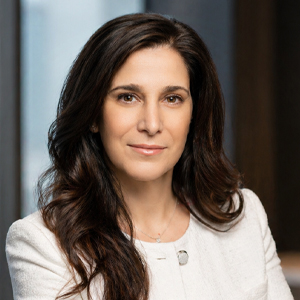
Sonia DeCaro
Sonia DeCaro is the Marketing Director at Soroc, with more than 15 years of experience leading B2B technology marketing initiatives across Canada's telecommunications sector. Having held leadership roles at organizations including Rogers and Bell, she brings expertise spanning brand strategy, product marketing, campaigns, digital, events and public relations. Since joining Soroc, she has led the company's brand transformation following its acquisition by Pomeroy Technology and is now focused on unifying the Soroc and Pomeroy brands under a shared North American narrative.
A Brand Begins With Understanding
I started my career believing marketing revolved around brand and creative. That changed. Over time, I learned it is a system built from product marketing, digital, campaigns, events, social, and PR. None of these disciplines succeeds on its own. The real work is connecting them. Doing that well requires understanding how each one functions and where each creates or removes friction for the customer. That understanding has let me link marketing initiatives to business goals and explain their value to leaders who need to see results. A brand only becomes meaningful when everyone inside knows what it stands for.
That belief sharpened when I joined Soroc. Leaving Bell was not an easy decision, but the opportunity was significant. Soroc had a respected presence in Canada, and when Pomeroy Technology completed its acquisition, a new chapter began that needed to be defined. Refreshing the website or updating visuals was not enough. We had to explain who we were becoming, what expanded value a broader North American support system could deliver, and how new technology, including BanzAI, our enterprise AI platform for zero-touch service automation, strengthened that story. My focus was on a new brand platform, a new narrative, and a stronger presence through social media, public relations, and customer events. The priority now is to bring Soroc and Pomeroy together as a single, coherent identity.
That experience reinforced something I had believed long before. A logo cannot carry a brand story. A brand becomes powerful only when it reflects a genuine understanding of the customer's world. If we cannot articulate the outcome a customer is trying to achieve or the challenge they face, the story will not connect. When the story does not connect, trust is difficult to earn. Trust is what makes a customer think of you when they need a solution. Without it, the most precise creative work loses its impact.
Alignment Inside Shapes Belief Outside
Marketing cannot function in isolation. It has to work alongside product, sales, and operations because a brand is not what marketing makes it out to be. It is what customers experience at every point of contact. Everyone inside needs to tell the same story and deliver the same value. Marketing can generate awareness, but trust is earned through consistency, through keeping promises, and through demonstrated expertise. Without brand trust, recognition means very little.
Customer understanding sits at the center of this. If you do not know the outcome a customer is trying to reach, or the specific problem standing in their way, no amount of creative effort will land. The strongest B2B brands solve real business problems and communicate that value with clarity. That clarity comes from time spent listening, not time spent talking. That discipline has proved essential as Soroc and Pomeroy build toward a shared identity. A brand that achieves that kind of alignment earns something that cannot be manufactured.
“ Customer understanding sits at the center of this. If you do not know the outcome a customer is trying to reach, or the specific problem standing in their way, no amount of creative effort will land. “
Creativity, growth, and accountability are not competing priorities. They connect. Accountability ensures resources serve a purpose. Innovation earns its place when it ties to clear business objectives. A test-and-learn mindset drives growth because trying new approaches is how better results are achieved. Whether that means experimenting with campaigns, rethinking the website, or improving how customers discover a brand online, the direction is always the same. Find better ways to tell the story. Credibility, consistency, and measurable value are not outcomes to aim for eventually. They are the discipline itself. When you practice that well, brand confidence follows.
Change Requires Belief, Not Just Direction
The Soroc brand transition has been the clearest test of everything I have learned. When I arrived, the challenge was not only about market positioning. It was about how the team felt about the brand they had spent years building. Many people had invested deeply in shaping Soroc's identity, and the prospect of merging raised real concern. Change touches people before it touches markets. My role was not to persuade them that change was simple. It was to help them see that this evolution was not about losing what they had built. It was about expanding it.
Internal alignment became as critical as anything happening in the market. Change cannot be announced from above and expected to hold. It requires patience, transparency, and genuine collaboration. You have to bring people with you, inside and out. Soroc's customers had known it since the early 1980s. When it evolved, they needed to understand why and see the benefit clearly. The message was direct. We were still Soroc, only with more behind us. That is why this project carries so much weight. Opportunities to reshape a brand at this scale are rare in B2B, and it has been one of the most significant experiences of my career.
The Future Still Starts With The Customer
Marketing works only when it stays close to the customer. Expectations are shifting, and the brands that earn sustained attention stay focused on the outcomes that actually matter. I can say anything about Soroc and Pomeroy, but if it does not connect to a customer's specific challenges, it carries no weight. That is as true now as it was at the start of my career.
AI has changed the pace of this work. It has compressed timelines and accelerated content production in ways that were not possible when I started. New marketers arrive today with those tools already in hand. When I began, everything came from research, instinct, and long hours working through ideas. That process was slower, but it built something AI cannot replicate. Judgment develops through experience, not acceleration. AI can speed up execution, but it does not replace the discernment that comes from truly understanding a customer. Knowing what they need, asking the right questions, and shaping a story that speaks to what matters to them are still our responsibilities. That part of marketing has not changed. I do not believe it will.
