


A featured contribution from Leadership Perspectives: a curated forum reserved for leaders nominated by our subscribers and vetted by our MarTech Outlook Advisory Board.

Jeremiah's Italian Ice
Growing Without Losing the Personal Touch
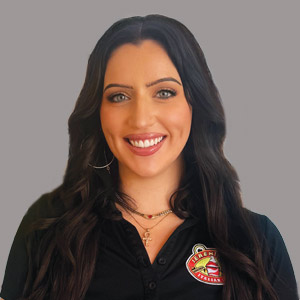
Sarah Feagins
Sarah Feagins, Local Store Marketing Manager for Jeremiah’s Italian Ice, supports its 18 original, company-owned locations. A large part of her role is focused on community marketing and helping managers build meaningful relationships with the schools, businesses, nonprofits, sports organizations and families surrounding their stores.
Keeping Community at the Core
Jeremiah’s Italian Ice has always been a brand built around both the product we serve and the communities we serve. Founded in Winter Park, Florida, in 1996, Jeremiah’s is known for our made-fresh-daily Italian Ice, rich and creamy Soft Ice Cream, and our signature Jelatis, which layers the two together to develop countless flavor profile combinations. Since then, the brand has grown from its original Central Florida roots into a burgeoning franchise system across the Southeast and beyond. Even as we grow, maintaining the welcoming, community focused experience our guests have known for nearly 30 years remains an important part of who we are.
As Jeremiah’s has grown, technology has naturally become a larger part of how we operate. Across our franchise system, we use a consistent group of platforms that support nearly every part of the business, from loyalty and digital ordering to point of sale, communication, training, social media and reporting. Those systems play a role in my day to day work, but from my perspective, one of the most interesting uses of technology is how it can help a growing brand become more organized and scalable without making the guest or community experience feel less personal.
From Store-Level Insight to System-Wide Value
Our company owned stores also give us an opportunity to test new ideas and processes on a smaller scale. Because I work directly with those 18 locations, I can identify challenges our managers are experiencing, explore solutions and learn from the results. When something works, those learnings can also help us understand what tools, processes or best practices may have value more broadly across the franchise system.
One example is Marvia, which gives our managers access to approved Jeremiah’s marketing materials that they can customize for their own fundraisers, partnerships and events. It allows stores to create something specific to their community while maintaining the consistency of the Jeremiah’s brand. For our managers, it means more flexibility and faster access to the materials they need. For our creative team, it reduces the need to recreate similar assets for individual locations.
I saw an even greater opportunity for that same balance when I began looking at how we were managing community relationships.
When my position was created, our stores were already deeply involved in their communities. Managers were partnering with schools, youth sports organizations, nonprofits and local businesses, hosting fundraisers and pursuing catering and vending opportunities. What we were missing was a consistent way to preserve the history and information behind those relationships.
Information could live in an email inbox, a saved PDF, a manager’s desktop or simply in someone’s memory. When managers rotated, some of that knowledge could leave with them. Resources could become outdated while older versions remained saved locally, and there was no single place to see the full history of a community partner, the events we had done together or the results of those efforts.
That led me to start exploring CRM technology.
Bringing Structure to Community Marketing
CRMs are typically associated with traditional sales pipelines, but I saw a lot of similarities with community marketing. Both depend on relationship building, consistent follow up, an understanding of previous conversations and the ability to learn from what ultimately produces results. The difference was that I wanted to apply that structure without making community outreach feel overly transactional.
“There is something valuable about the personal, almost mom and pop feeling that comes from a store truly knowing and participating in its community. Technology does not have to replace that. Used thoughtfully, i believe it can actually help protect it.”
We ultimately implemented Zoho CRM specifically within our company owned store group and customized it around the way our managers actually work. Zoho is not currently a systemwide Jeremiah’s platform. Instead, our company owned stores have given us an opportunity to explore how CRM technology can support this specific area of the business and what we can learn from it.
Today, our CRM connects community partners, conversations, digital agreement forms, events and results within the same ecosystem. Managers can understand the history behind a relationship instead of starting from scratch, while I have much greater visibility into what is happening across our stores. We can better understand what types of organizations we are connecting with, identify opportunities, provide managers with more consistent resources and begin learning which approaches are producing meaningful results.
We are only in our first full year of implementation, which means there is still a great deal we can learn from the information we are collecting. What began as a way to better organize community marketing is becoming a living knowledge hub for our company owned stores. As the program develops, I also see an opportunity to use those learnings to help our broader franchise community understand how CRM tools and stronger processes can support their own local relationship building.
For me, that is where technology becomes most valuable.
Making Scale Feel Personal
As brands grow, efficiency and automation become increasingly important, but they should not come at the expense of genuine human connection. The right technology can handle more of the organization behind the scenes so our managers have better information, stronger resources and more time to focus on the relationships happening in front of them.
There is something valuable about the personal, almost mom and pop feeling that comes from a store truly knowing and participating in its community. Technology does not have to replace that. Used thoughtfully, I believe it can actually help protect it.
As Jeremiah’s continues to grow, that is the balance I am most interested in: using technology to become more organized, informed and scalable while still making sure our stores feel like genuine members of the communities they serve.
